
The Constraints
-
Hybrid Delivery
The system had to support live-streamed classes and asynchronous self-paced modules simultaneously.
-
Legacy Content
Migrating 5,000+ hours of video content from a static file server to an adaptive streaming architecture.
-
Assessment Logic
Tests needed to be dynamic; questions should adapt based on the student's previous answers (IRT).
The Approach
Modular Architecture
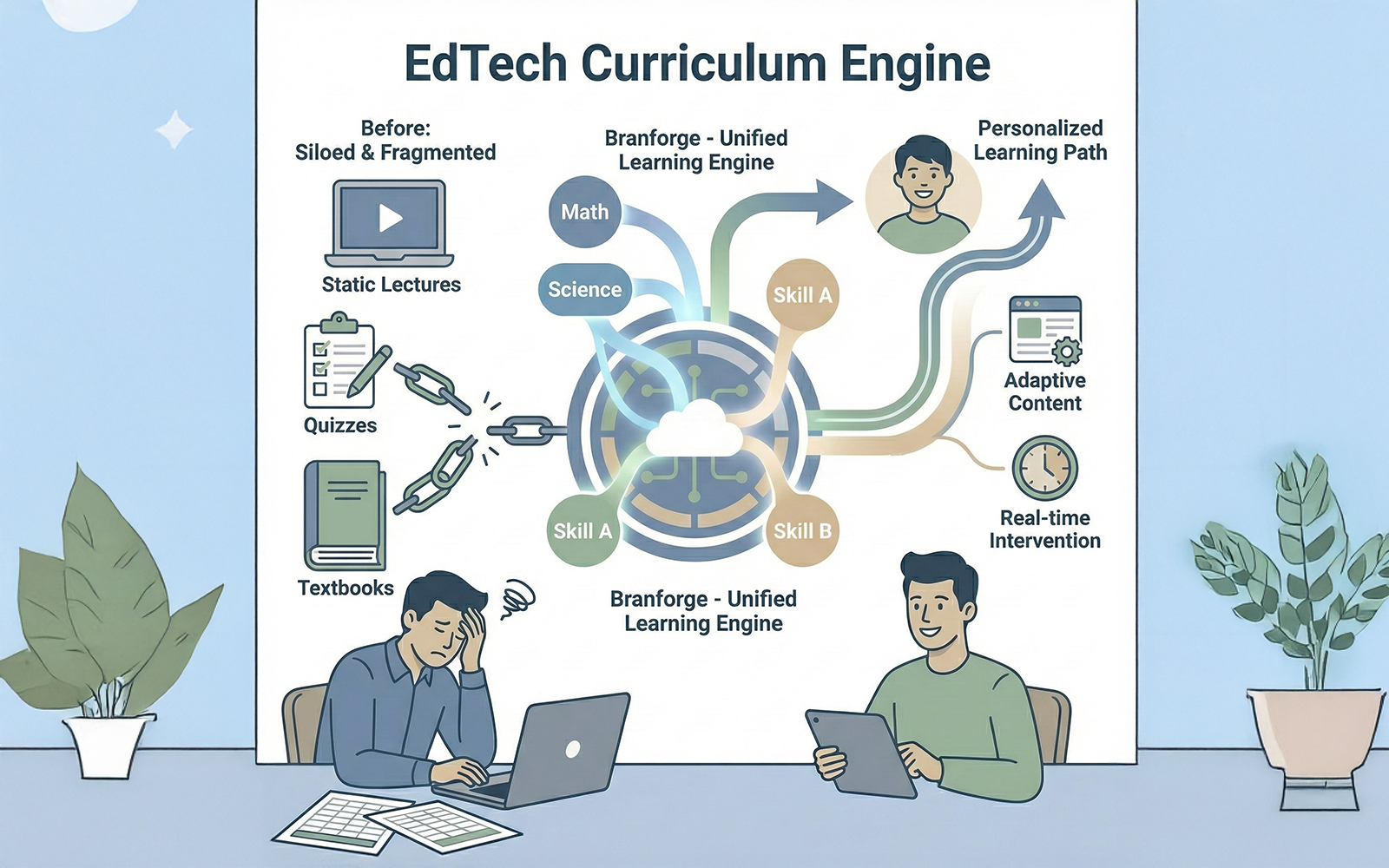
We broke the monolithic course structure into atomic "Learning Objects." This allowed instructors to remix content into new degree programs without duplication.
Adaptive Video
Implemented AWS MediaConvert to transcode legacy video into adaptive bitrate streams (HLS), ensuring smooth playback even on 3G connections in remote areas.
Unified Student Profile
Created a single "Truth Source" for student progress. Whether they watched a video, took a quiz, or attended a live session, it all fed into one progress bar.
Instructor Dashboard
Designed a "Red Flag" system for teachers. Instead of reviewing all grades, they get alerts for students who are falling behind the cohort average.
The Outcome
Increase in student course completion rates.
Degree programs launched using existing content assets.
Reduction in streaming bandwidth costs via optimized encoding.
Intervention alerts for at-risk students.